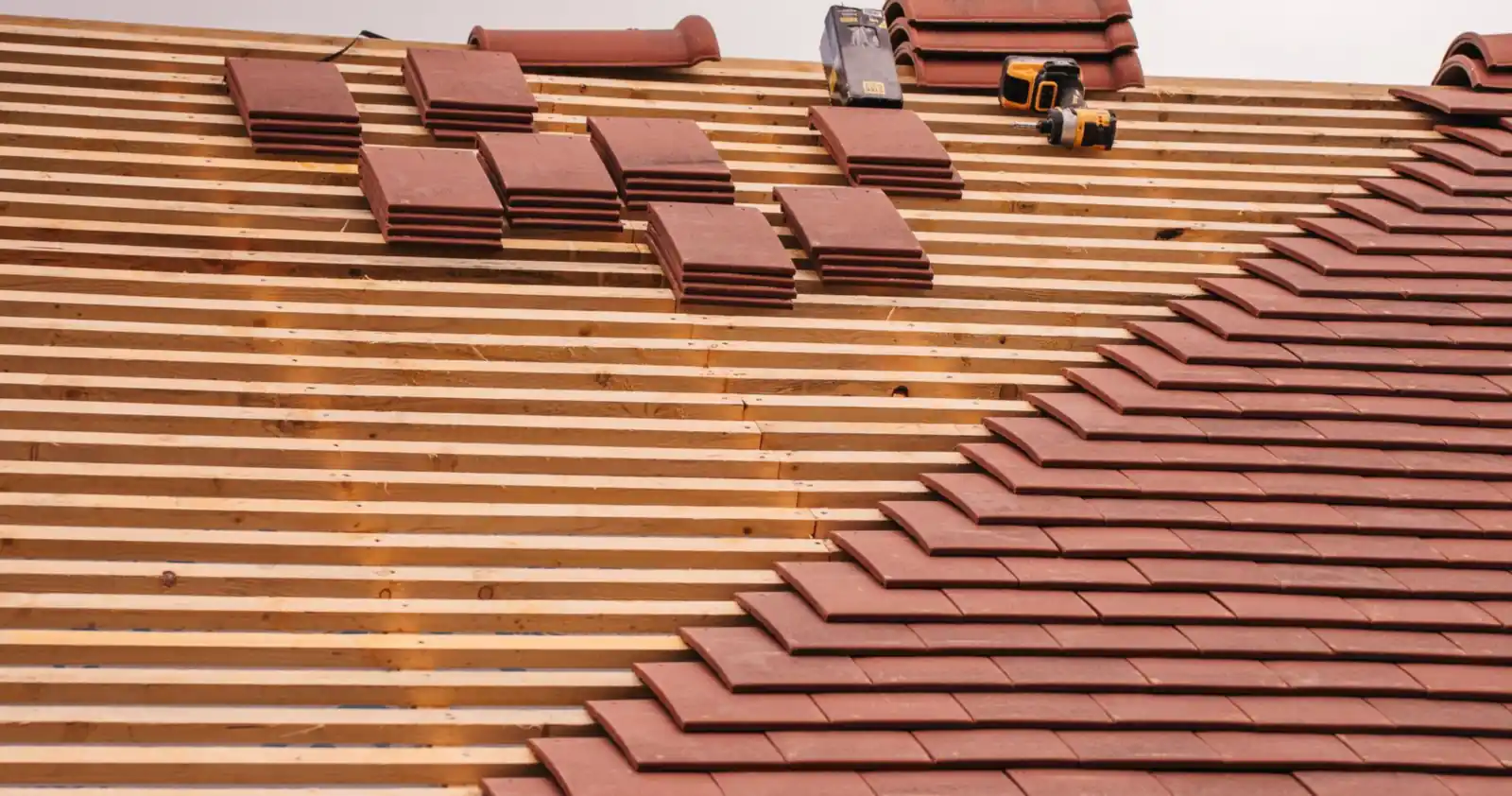
A concrete tile roof is covered with tiles molded from cement, sand and water, then cured and colored. Concrete roof tiles are heavy and durable, and they come in flat, low and high profiles, including S tiles that copy the look of Spanish clay tile. They are common on homes across the Dallas area, and the tiles often last around 50 years, though the underlayment under them usually needs attention sooner.
This guide explains what concrete tile is, how it compares with clay and asphalt shingles, what it costs and how to care for it.
What is a concrete tile roof?
Concrete roof tiles are made from a mix of cement, sand and water that is pressed into shape and cured. The color is either mixed through the whole tile or applied as a surface coat. Most concrete tile falls into three shapes:
- Flat tiles for a clean, modern roofline or a slate or shake look.
- Low profile tiles with a gentle wave across the roof.
- High profile or S tiles that copy the rolling look of a Spanish tile roof.
How heavy is a concrete tile roof?
Much heavier than shingles. The Journal of Light Construction puts standard-weight concrete tile at about 9.5 to 12 pounds per square foot, compared with 2.5 to 4 pounds for asphalt shingles. Lightweight concrete tiles of about 5.5 to 7 pounds per square foot exist for roofs that cannot carry the full load.
Lighter is not always better. Training material from a concrete tile maker notes that lightweight tiles are less durable than standard-weight tiles and more likely to break from hail and foot traffic, which matters in a hail-prone area like North Texas.
Pros and cons of concrete tile
Pros
- Long life. The tiles often last around 50 years when they are not damaged.
- Lower cost than clay. Concrete tile usually costs less than clay for both material and installation.
- Many colors and profiles. Concrete can be made in a wide range of colors and shapes, from flat to S tile.
- Solid in wind and sun. Heavy, properly fastened tiles stay put and shade the roof deck.
Cons
- Weight. The roof framing has to be designed for tile, which matters when switching from shingles.
- Water absorption. Concrete absorbs more water than clay, which can lead to staining or algae on shaded slopes.
- Color fade. Surface color can fade over the decades, which makes repairs harder to match.
- Breakage. Tiles crack under foot and in large hail, and lightweight tiles break more easily.
Concrete vs clay roof tiles
| Feature | Concrete tile | Clay tile |
|---|---|---|
| Typical lifespan | Around 50 years | Up to 100 years or more |
| Weight | One of the heaviest roofing materials | Lighter than concrete, heavier than shingles |
| Water absorption | Absorbs water more readily | Stays water resistant |
| Color | Wide range of colors, can fade | Natural earth tones that hold up |
| Material cost | $2 to $4 per square foot | $3 to $7 per square foot |
Figures and comparisons are from Angi's comparison of clay and concrete roof tiles, checked in November 2026.
Concrete tile roof vs asphalt shingles
Asphalt shingles are lighter and cheaper up front. Angi notes that concrete tile costs about twice as much as asphalt for materials, at $2 to $4 per square foot against $1 to $2. In return, concrete tile usually lasts far longer than shingles and keeps its shape and look for decades. Because of the extra weight, a switch from shingles to concrete tile needs a structural check first.
How long does a concrete tile roof last?
The tiles themselves often last around 50 years. As on any tile roof, the underlayment usually sets the real timeline, and traditional felt underlayment often lasts about 20 to 30 years. When it wears out, the tiles can usually be lifted and reused while new underlayment goes down. Read how long a tile roof lasts for the warning signs.
How much does a concrete tile roof cost?
Angi's tile roof cost data lists concrete tile at $2 to $4 per square foot for materials and $9 to $18 per square foot installed. Simple interlocking profiles sit at the low end, while complex shapes, steep pitches, tear-off and extra flashing push the price up. These are national figures, not a quote.
For a fix on an existing roof, our tile roof repair cost guide covers typical repair ranges.
Concrete tile roof maintenance
- Clear valleys and gutters so water and debris do not back up under the tiles.
- Replace cracked tiles quickly before sun and water reach the underlayment.
- Reset slipped tiles that sit lower than the rest of their row.
- Clean gently. High-pressure washing can wear tile surfaces and push water under the tiles, so use low pressure or hire someone who works on tile.
- Check after hail and keep dated photos of any damage you find.
- Fix damage early. If you already see cracked or slipped tiles, our concrete tile roof repair page explains the next step.
Questions about your own roof? Call (469) 564-0533 or use the quote form at the top of this page.