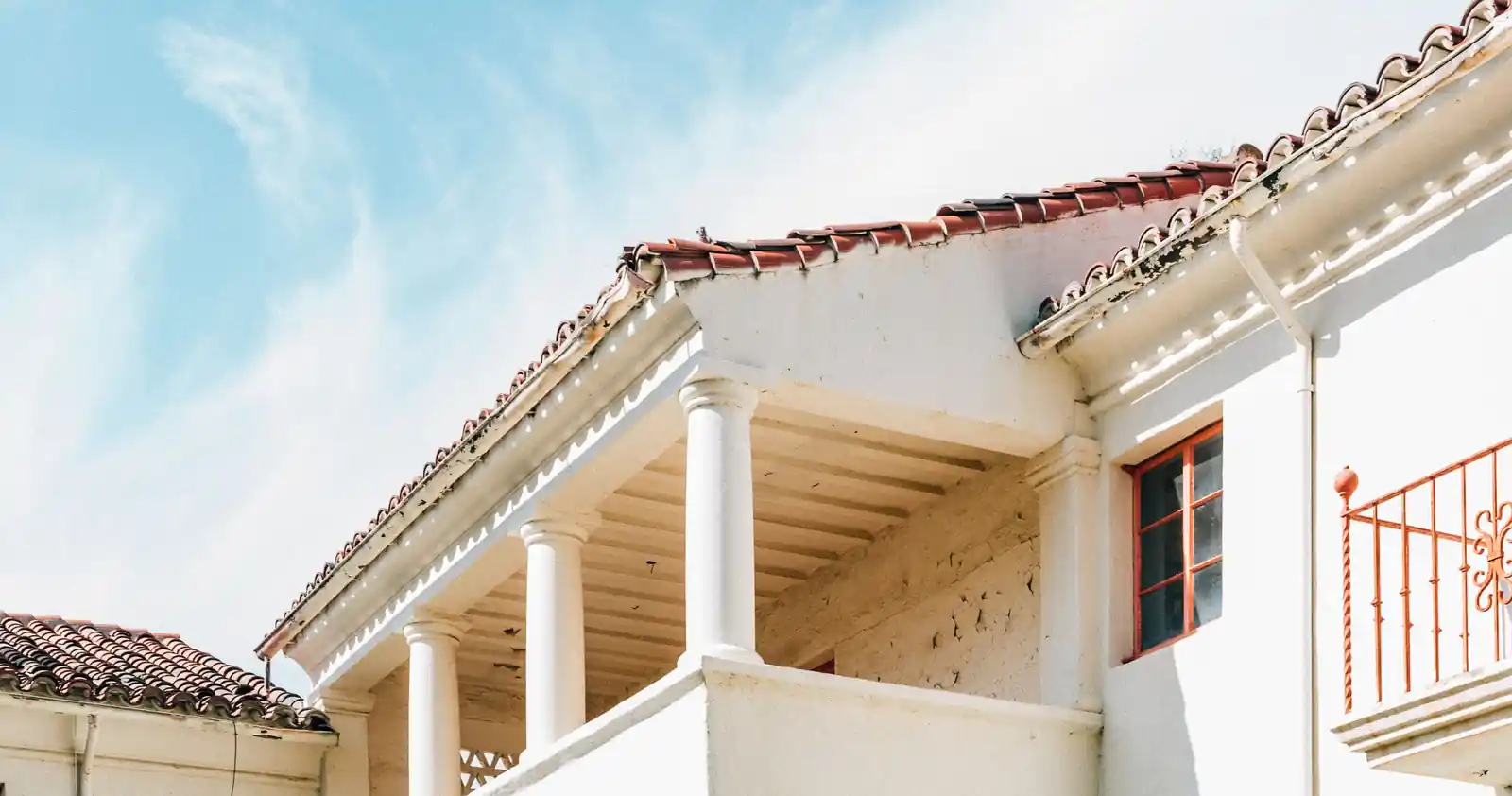
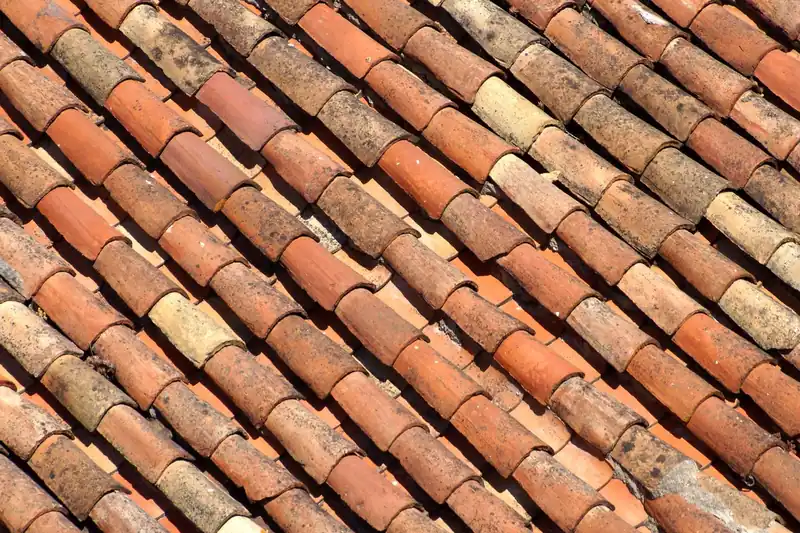
A Spanish tile roof is covered with curved tiles that form rolling rows of high and low channels across the roof. The tiles are usually clay, though concrete versions are common too. There are two main styles: a one-piece S tile and a two-piece barrel tile, also called mission tile. Clay tiles can last 50 to 100 years, but the underlayment under them usually needs work much sooner.
This guide covers how a Spanish tile roof is built, its pros and cons, lifespan, cost and the care it needs, with notes for homes in Frisco and the rest of North Texas.
What is a Spanish tile roof?
The name describes a look more than a single product. Spanish tile, barrel tile and mission tile are all names for the curved tile seen on Spanish, Mission and Mediterranean style homes. The curves form channels that carry water down the roof and give it deep shadow lines.
According to the International Institute of Building Enclosure Consultants (IIBEC), these tiles are made either as a one-piece barrel or S tile, which comes in both clay and concrete, or as a two-piece barrel or mission tile, which is made from clay only.
Spanish S tile vs two-piece barrel tile
| Feature | One-piece S tile | Two-piece barrel tile |
|---|---|---|
| How it is built | One tile combines the low pan and the raised curve. | Separate pan tiles sit under curved cover tiles. |
| Material | Clay or concrete. | Clay. |
| Look | Even, rolling rows. | Deeper, more handmade shadow lines. |
| Installation | Fewer pieces and faster to lay. | Twice the pieces and more labor. |
| Repair notes | Tiles interlock, so neighbors are lifted in order. | Covers can slip or crack, and pans collect debris. |
Pros and cons of a Spanish tile roof
Pros
- Long-lasting tiles. Clay tile is known for a service life of 50 to 100 years when it is not damaged.
- Color that holds up. The color of fired clay goes through the tile, so it keeps its look in strong sun.
- Built for heat. Angi notes that clay tile does well in hot, sunny climates, partly because the air gap under the tiles limits heat transfer.
- Curb appeal. The rolling profile suits Spanish, Mission and Mediterranean style homes and stands out on a street.
Cons
- Weight. Tile is far heavier than asphalt shingles, so the roof framing has to be designed to carry it.
- Upfront cost. A Spanish tile roof costs more to install than shingles, as the cost section below shows.
- Brittle under foot. Curved tiles crack under a careless step, so other trades on the roof can cause damage.
- Specialized repairs. Matching the color and lifting curved tiles without breaking their neighbors takes tile experience.
How long does a Spanish tile roof last?
Clay Spanish tiles often last 50 to 100 years, and Angi says clay can last up to 100 years or more with proper care. Concrete S tiles commonly last around 50 years. The weak link is the underlayment under the tiles. Traditional felt underlayment often lasts about 20 to 30 years, so a barrel tile roof's life expectancy depends on renewing that layer, not on the tiles alone.
When the underlayment wears out, the tiles can usually be lifted, new underlayment installed and the same tiles set back in place. Our guide on how long a tile roof lasts lists the signs that it is time.
What does a Spanish tile roof cost?
HomeGuide puts a Spanish tile roof at about $8 to $25 per square foot installed, or $2.50 to $11 per square foot for the tile alone. Angi's tile roof cost data lists clay tile at $8 to $25 per square foot installed and concrete tile at $9 to $18. Two-piece barrel tile tends to sit toward the higher end, because it takes more pieces and more labor.
These are national figures, not a quote. Roof size, pitch, tear-off, underlayment, flashing and HOA requirements all change the final number. If your Spanish tile roof needs a repair rather than a new roof, see our tile roof repair cost guide.
Spanish tile roof maintenance
- Keep pans and valleys clear. Leaves and debris in the low channels hold water against the underlayment.
- Watch for slipped covers. On a two-piece roof, a cover tile that slides down leaves the seam below it open.
- Check ridges and hips. Ridge and hip tiles are often set in mortar, which can crack over time.
- Look after storms. After hail, scan gutters and the yard for broken pieces and take photos from the ground.
- Keep foot traffic off. Ask solar, satellite and HVAC crews to work with someone who knows how to walk tile.
- Get regular checks. A tile roof inspection after major storms catches small problems while they are still small.
What about synthetic and metal Spanish tile?
Synthetic tiles and metal panels shaped like Spanish tile copy the look at a fraction of the weight. They are different products with their own installation rules and ratings, so compare the manufacturer's specifications and warranty instead of assuming they perform like clay.
Spanish tile roofs in Frisco and North Texas
Hot summers suit clay tile well, but spring storms with large hail can crack tiles and expose the underlayment. In HOA neighborhoods, a change of roof color or material often needs approval, and repairs are expected to blend in with the original tile.
If your Spanish tile roof has cracked, slipped or missing tiles, our clay tile roof repair page explains how barrel and S tiles are repaired and matched. For concrete S tile, see concrete tile roof repair, or call (469) 564-0533 to talk through what you see.